

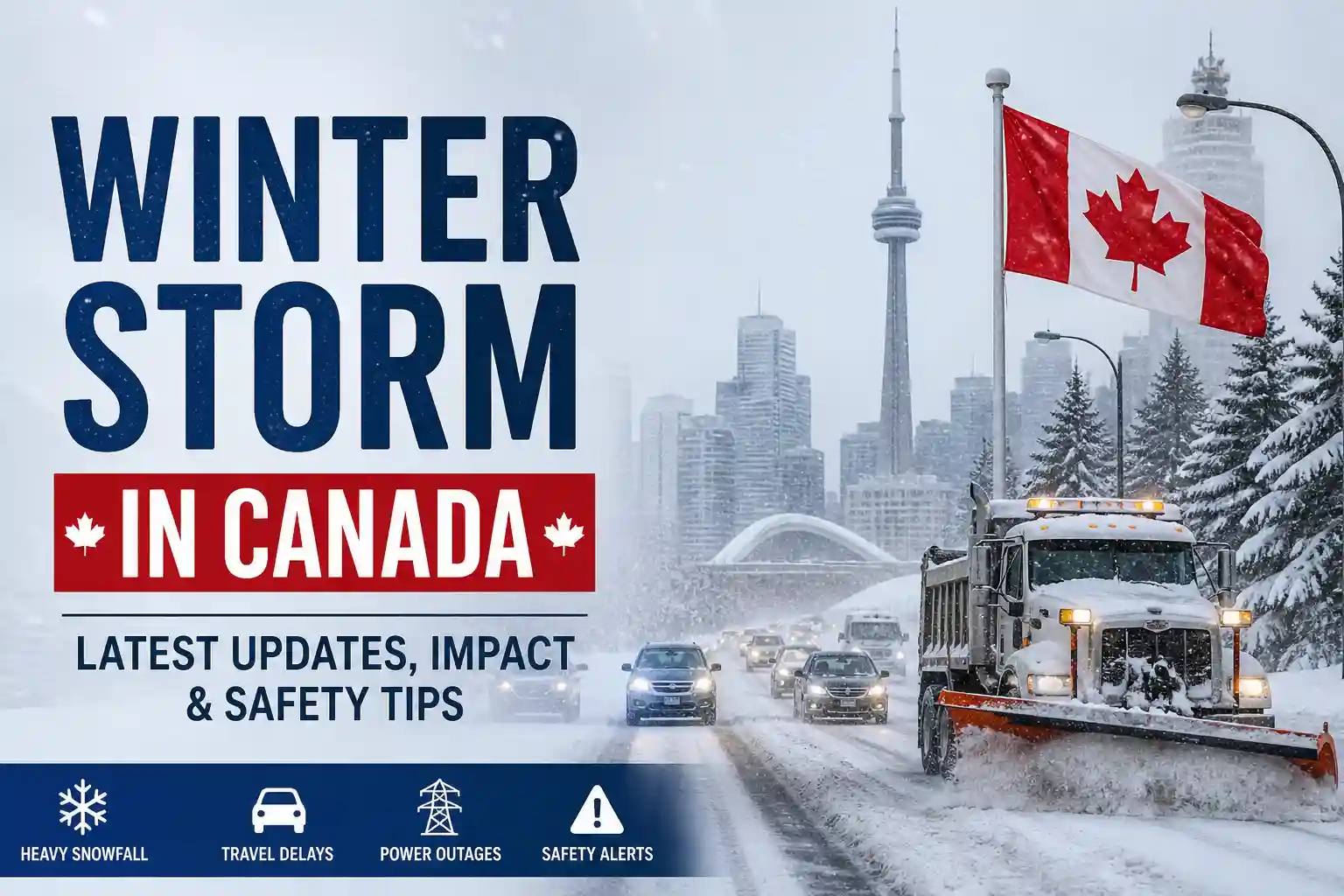
A powerful winter storm in Canada is once again drawing national attention, disrupting daily life across multiple provinces and reminding residents how quickly conditions can turn severe during the colder months. From heavy snowfall to freezing rain and strong winds, the situation continues to evolve, with authorities urging caution and preparedness.
Current Situation and Affected Regions
The latest winter storm in Canada has impacted large parts of Ontario, Quebec, and the Atlantic provinces. Major cities, including Toronto, Montreal, and Ottawa, have reported significant snowfall accumulation, while rural areas are facing even harsher conditions with reduced visibility and blocked roadways.
Meteorologists have noted that this system is particularly intense due to a combination of Arctic air and moisture from the south, creating a mix of snow, ice, and gusty winds. In some regions, snowfall has exceeded 25–40 cm within a short period, making travel extremely difficult.
Travel Disruptions and Safety Concerns
One of the most immediate effects of the winter storm in Canada has been widespread travel disruption. Airports have reported delays and cancellations, while highways and local roads are experiencing dangerous driving conditions.
Authorities are advising residents to:
- Avoid non-essential travel
- Keep emergency kits in vehicles
- Monitor local weather updates regularly
Public transportation systems have also been affected, with delays and temporary suspensions in some areas. Emergency services remain on high alert, responding to accidents and assisting stranded motorists.
Power Outages and Infrastructure Impact
Another major concern during this winter storm in Canada is power outages. Ice accumulation on power lines and strong winds have led to outages in several communities, leaving thousands without electricity.
Utility companies are working to restore power, but progress can be slow due to hazardous conditions. Residents are being encouraged to:
- Keep backup heating options ready
- Charge essential devices in advance
- Avoid downed power lines at all costs
Infrastructure such as schools, offices, and public facilities has also been temporarily shut down in affected areas.
How Residents Are Coping
For many Canadians, dealing with a winter storm in Canada is part of life, but each storm brings its own challenges. Communities are coming together, helping neighbors clear snow and sharing resources during outages.
Local businesses are adapting by offering flexible hours or temporary closures, while remote work options have become increasingly common during such events. This adaptability reflects a broader understanding of risk management—similar to how industries like betting analyze uncertainty and prepare for variable outcomes. In both cases, preparation and timely decision-making make a significant difference.
Expert Insights and Weather Patterns
Weather experts explain that the increasing intensity of storms like this winter storm in Canada may be linked to shifting climate patterns. Warmer air holds more moisture, which can result in heavier snowfall when temperatures drop.
Forecast models suggest that while the current storm may weaken over the next few days, additional systems could follow. This pattern highlights the importance of staying informed and prepared throughout the winter season.
Tips to Stay Safe During a Winter Storm
Staying safe during a winter storm in Canada requires both awareness and preparation. Here are some practical tips:
- Stock up on essentials like food, water, and medications
- Keep flashlights, batteries, and blankets accessible
- Dress in layers to prevent hypothermia
- Check on elderly neighbors and vulnerable individuals
- Follow official advisories and emergency alerts
Small steps can significantly reduce risk and improve safety during extreme weather conditions.
Economic and Daily Life Impact
Beyond immediate safety concerns, a winter storm in Canada can also affect the economy. Delays in transportation disrupt supply chains, while closures impact businesses and daily productivity.
However, industries have become more resilient over time. Digital services, remote work, and improved forecasting tools have helped minimize long-term disruptions. The ability to adapt quickly has become essential in managing both economic and personal challenges during severe weather.
What to Expect Next
As the current winter storm in Canada begins to move eastward, conditions are expected to gradually improve in some regions. However, lingering snow and ice will continue to pose risks, especially during early morning and nighttime hours.
Authorities recommend staying cautious even after the storm passes, as black ice and residual snow can still lead to accidents.
Final Thoughts
The ongoing winter storm in Canada serves as a reminder of the country’s challenging winter climate and the importance of preparation. While disruptions are inevitable, informed decisions and community support can help reduce risks and ensure safety.
By staying updated, following expert guidance, and preparing in advance, residents can navigate even the harshest winter conditions with greater confidence and resilience.
For More Infornmation please visit our website – theshayarihub